Green Power Premium Steel is now certified in the highest Low Emission Steel Standard category through its application of renewable electricity and biogenic carbon.
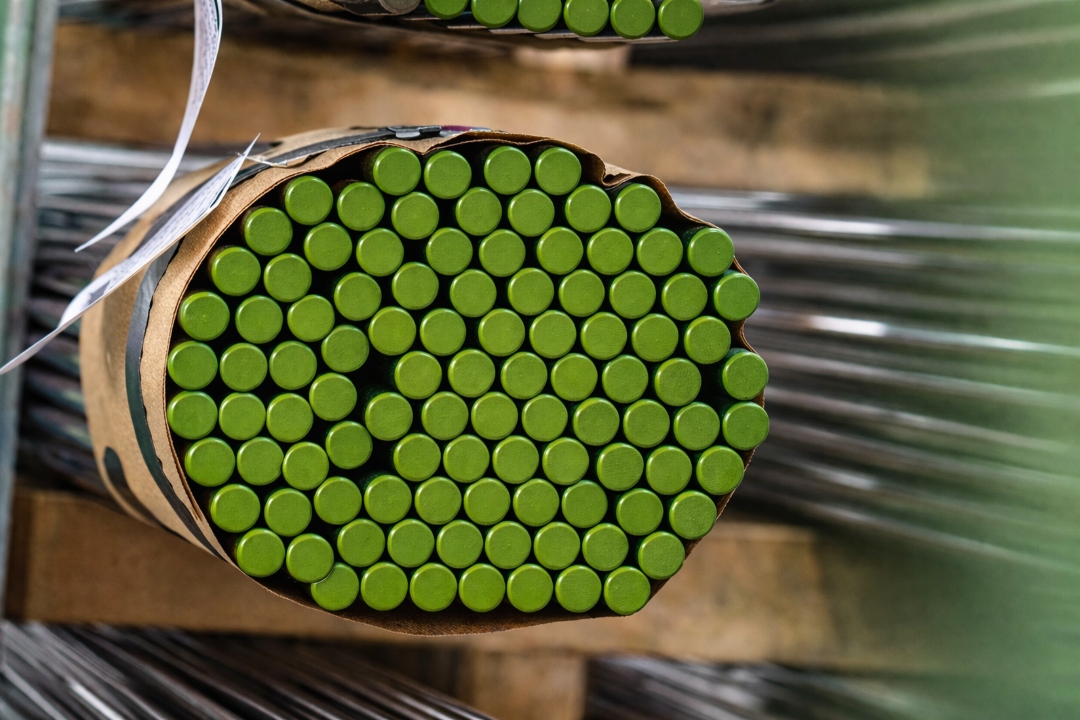
GMH Gruppe has reached another important milestone in the decarbonisation of steel production: the company is now able to deliver Green Power Premium Steel classified as LESS label class A.
With this achievement, GMH Gruppe further strengthens its role as a pioneer of climate-friendly steel and demonstrates that steel with highly-reduced carbon emissions can already be produced at industrial scale in Europe – reliably, transparently, and at competitive conditions.
LESS A: the highest category for low-emission steel
The LESS classification system evaluates steel based on its verified climate performance, transparency, and traceability. Classification A represents the highest level within the low-emission categories, immediately below the “Near Zero” status.
Reaching LESS A confirms that GMH’s Green Power Premium Steel combines:
Green electricity and biogenic carbon as key enablers for the production of Green Power Premium Steel
The decisive factors behind LESS A classification are GMH Gruppe’s consistent use of renewable electricity and biogenic carbon:
Unlike future-dependent hydrogen-based concepts, this approach is already fully operational today.
A concrete solution for the automotive industry
Green Power Premium Steel is already being supplied to automotive customers and delivers measurable CO₂ savings per vehicle. Its key advantage: technological neutrality. It reduces emissions in both combustion-engine vehicles and electric vehicles, making it a robust solution under the evolving EU regulatory framework.
“Achieving Label Class LESS A with Green Power Premium Steel shows that climate-friendly steel is no longer a vision for the future – it is already an industrial reality today,” said Dr. Alexander Becker, CEO of GMH Gruppe. “By combining renewable electricity, biogenic carbon, and electric arc furnace technology, we offer our customers a credible and immediate way to reduce emissions in their value chains significantly. Climate-neutral steel from German production – it is already available today.”
Strengthening green lead markets in Europe
With the ability to deliver LESS A-classified steel, GMH Gruppe supports the development of green lead markets in Europe. Transparent standards, such as LESS, create trust, comparability, and investment security – for producers and customers alike.
GMH Gruppe remains committed to its goal of achieving full climate neutrality in Scopes 1 and 2 by 2039, continuing to invest in scalable solutions that combine environmental responsibility with industrial competitiveness.
LESS sets the new benchmark for sustainable steel
LESS was developed by industry and policymakers to promote comparability and transparency in the evaluation of low-carbon steel. The standard is built around three core elements:
1. Grading of climate performance on a scale from E (lowest) to A (highest within the low-emission categories), complemented by an additional “Near Zero” status. This top-level classification is only achievable if the entire supply chain is demonstrably decarbonised.
2. Disclosure of the scrap share indicating the proportion of recycled material used in the production process.
3. Information about Product Carbon Footprint (PCF), providing a quantifiable and comparable measure of CO₂ emissions across the full value chain, including upstream processes such as electricity generation and alloy production. The Product Carbon Footprint (PCF) is not determined within the LESS standard itself but must be verified independently. Nevertheless, steel producers are expected to disclose the PCF of the final product on the LESS label.
Together, these elements create a transparent framework that lays the foundation for green lead markets across Europe’s basic materials industries.

Managing Director
Beitrag teilen