GMH Gruppe´s €21.5 million investment underscores a commitment to transformation, competitiveness, and decarbonisation — even in challenging economic times
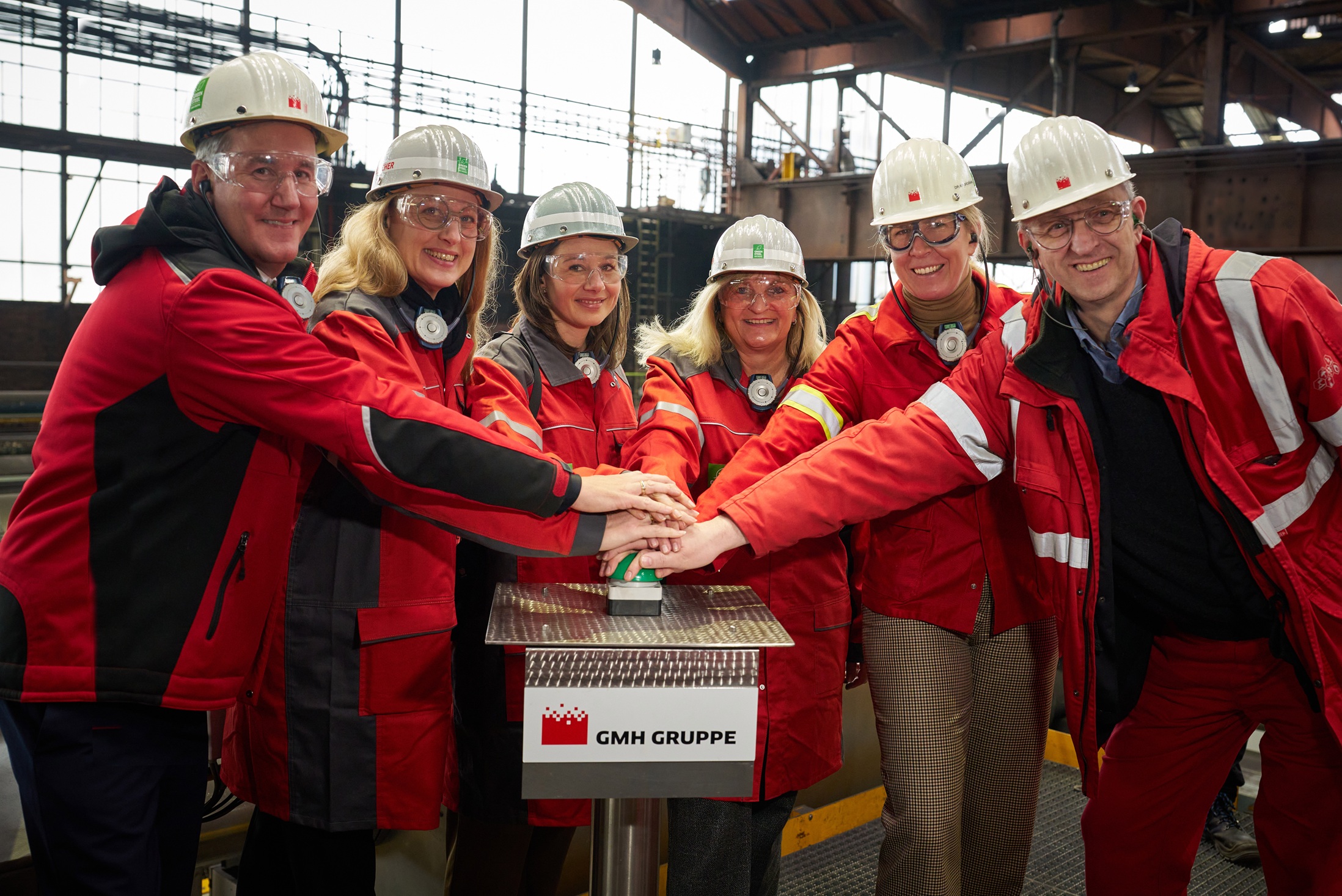
At a time when many industrial companies across Europe are postponing or reconsidering investments due to economic uncertainty and volatile energy markets, Georgsmarienhütte GmbH is deliberately continuing on its transformation path. With the commissioning of its second inductive single-rod tempering system (EVA 2), the largest steel factory within GMH Gruppe is scaling up a key technology for climate-friendly steel production and future-oriented markets.
Following the successful start-up of EVA 1 in February 2024, the company has now doubled its capacity in electric single-bar tempering. The total investment volume of €21.5 million in both systems sends a clear signal: GMH Gruppe is committed to strengthening Germany as an industrial location, while consistently advancing its transformation towards climate-neutral steel production.
Of the investment, €2.2 million is funded through the Federal Ministry for Economic Affairs and Climate Protection’s (BMWK) “Decarbonisation in Industry” program, which is supported by the EU's “NextGenerationEU” initiative. This is supervised by the Competence Center for Climate Protection in Energy-Intensive Industries (KEI).
A clear commitment to industrial resilience in Germany
Dr. Alexander Becker, CEO of the GMH Gruppe, states: "With the commissioning of EVA 2, we are deliberately continuing our investment course — despite challenging economic conditions. Electrification is a central lever for climate-neutral steel production. We are largely driving this transformation with our own resources because we are convinced it is both economically and ecologically necessary. However, competitive and reliable energy supply conditions remain essential for industrial success in Germany. With the completion of its second electric single-bar tempering system, GMH Gruppe reinforces its long-term strategy: combining technological innovation, industrial performance, and credible climate action. In doing so, the company underlines its role as a resilient, family-owned industrial group that invests consistently in the future of sustainable steel production in Europe."
Scaling proven technology for high-strength quality steels
While EVA 1 processes bars with diameters of 20 to 60 millimeters, EVA 2 expands the range to 35 and 100 millimeters. Together, the two systems reach a total annual capacity of around 35,000 tons of fully electrically heat-treated steel.
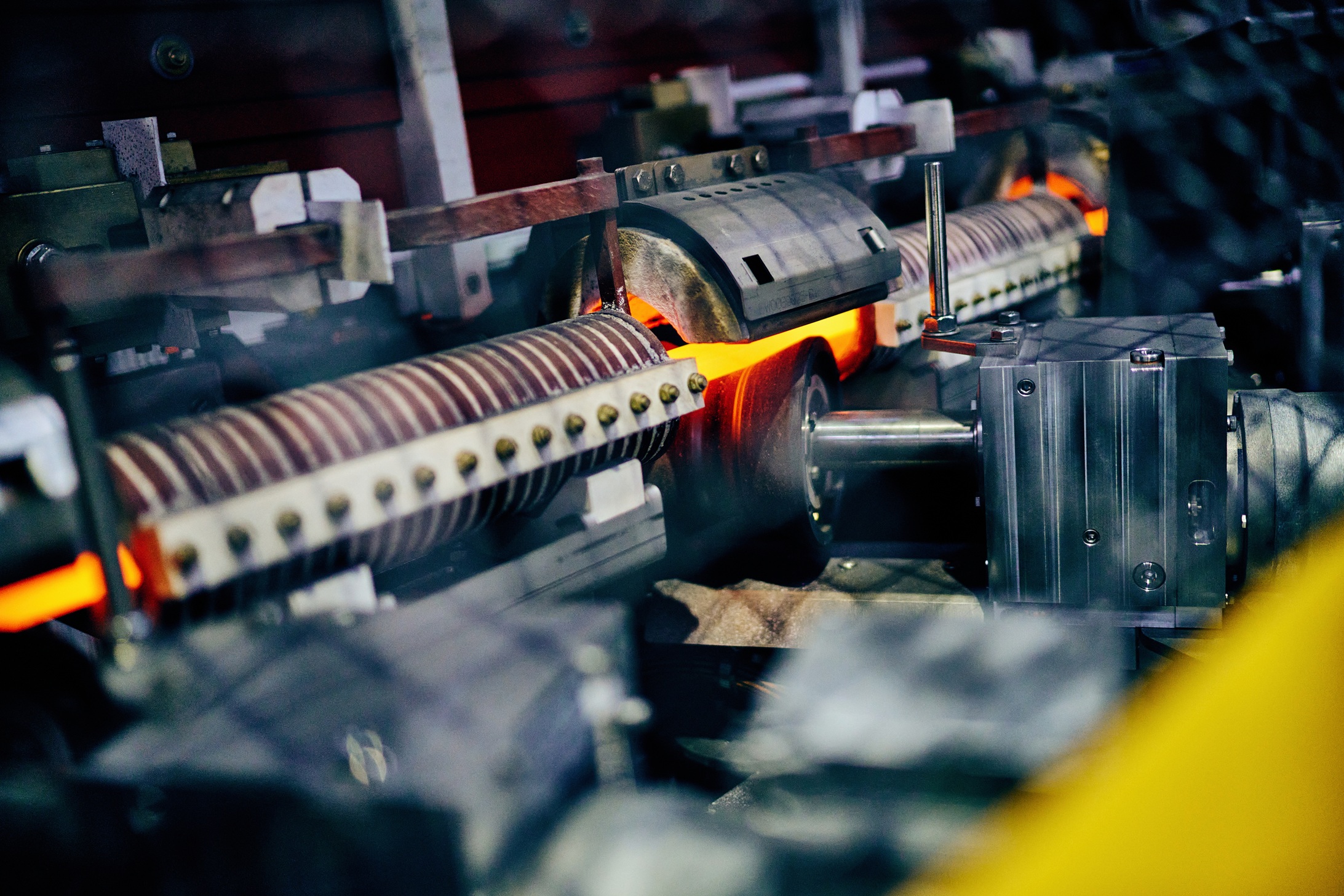
The fully automatic inductive single-bar tempering process heats each bar — with a length of up to 10 meters — to over 900 degrees Celsius, cools it in a controlled manner and reheats it to a tempering temperature of between approximately 650 degrees Celsius and 750 degrees Celsius. This achieves precisely defined strength and toughness properties. Process stability, occupational safety, and consistent product quality are also significantly improved.
This technological capability enables customers to manufacture highly durable key components for demanding applications — including fasteners for wind turbines, components for conveyor and industrial systems, steering elements for automotive applications, and other safety-relevant parts. By scaling this technology, GMH Gruppe strengthens its position in growth markets such as renewable energy and advanced mechanical engineering.
Electrification as a concrete decarbonisation lever
At the core of both EVA systems is the electrification of heat treatment. Designed to be operated with up to 100 per cent green electricity, the technology replaces natural gas with renewable power. Over the next ten years, this step alone is expected to save well over 50,000 tons of CO₂.
EVA 2 is therefore not just a capacity expansion, but a structural contribution to GMH Gruppe's transformation strategy. By 2030, the company has committed itself to a 50 per cent cut in greenhouse gas emissions and to achieving climate-neutral production by 2039.
Georgsmarienhütte GmbH already provides Product Carbon Footprint (PCF) for all steel grades. The methodology, validated by TÜV SÜD, is applied to more than 1,000 steel grades, ensuring transparent, reliable, and comparable CO₂ data for the entire product portfolio. The steel is produced using almost 100 percent recycled scrap in electric-arc furnaces, forming the basis for a significantly reduced carbon footprint compared to conventional blast furnace routes. In addition, the company is one of the first steel manufacturers to be certified according to the new Low Emission Steel Standard (LESS).

Beitrag teilen